

• Authorized Government Partner
Official ECTN, BESC, and ACD certification for 25+ African countries
• Zero-Error Compliance
AI-driven validation ensures documents meet regulatory standards on the first submission
• Trusted by Industry Leaders
Compliance solutions serving global carriers including Maersk, DHL, and Bolloré
• Comprehensive African Coverage
One-stop platform across West, Central, and East Africa, with hubs in Dubai, the Netherlands, and Turkey
Author: Ozgur Balbay
Editor: Abdullah Abdul-Ghafar
Last updated: March 2026
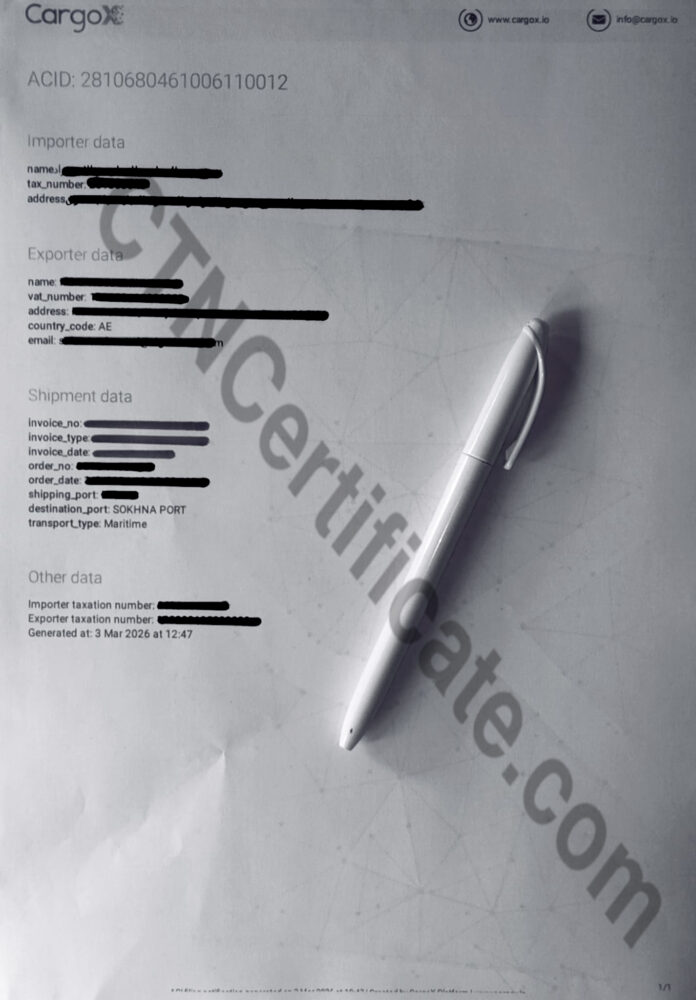
The Advanced Cargo Information Declaration, commonly known as the ACID Number, is Egypt’s mandatory pre-shipment registration system. Instituted by the Egyptian Customs Authority and operated through the NAFEZA national trade portal, it ensures every shipment is verified before arrival — reducing customs delays and securing the supply chain.
The ACID system is not just about compliance; it’s a strategic tool designed to secure the supply chain and promote a more predictable trading environment. While ACID is specific to Egypt, many African countries enforce similar pre-shipment tracking requirements under names like CTN, ECTN, BSC, or BESC.
What Filing Egypt?
ACI Filing (Advanced Cargo Information Filing) is Egypt’s pre-shipment customs system, mandated by the Egyptian Customs Authority as part of the World Customs Organization’s (WCO) standards for trade facilitation and cargo security.
The ACI filing process involves submitting detailed cargo information electronically before the goods are shipped. This allows customs to assess and clear shipments more rapidly upon arrival, significantly reducing wait times and enhancing the efficiency of the import process.
Key Facts for 2026
- Mandatory for sea and air freight: The system has been mandatory for sea freight since October 2021. As of January 1, 2026, it is now strictly mandatory for all air freight shipments as well. Any cargo arriving in Egypt by sea or air without a valid ACID number will be rejected and returned to the origin at the carrier’s expense.
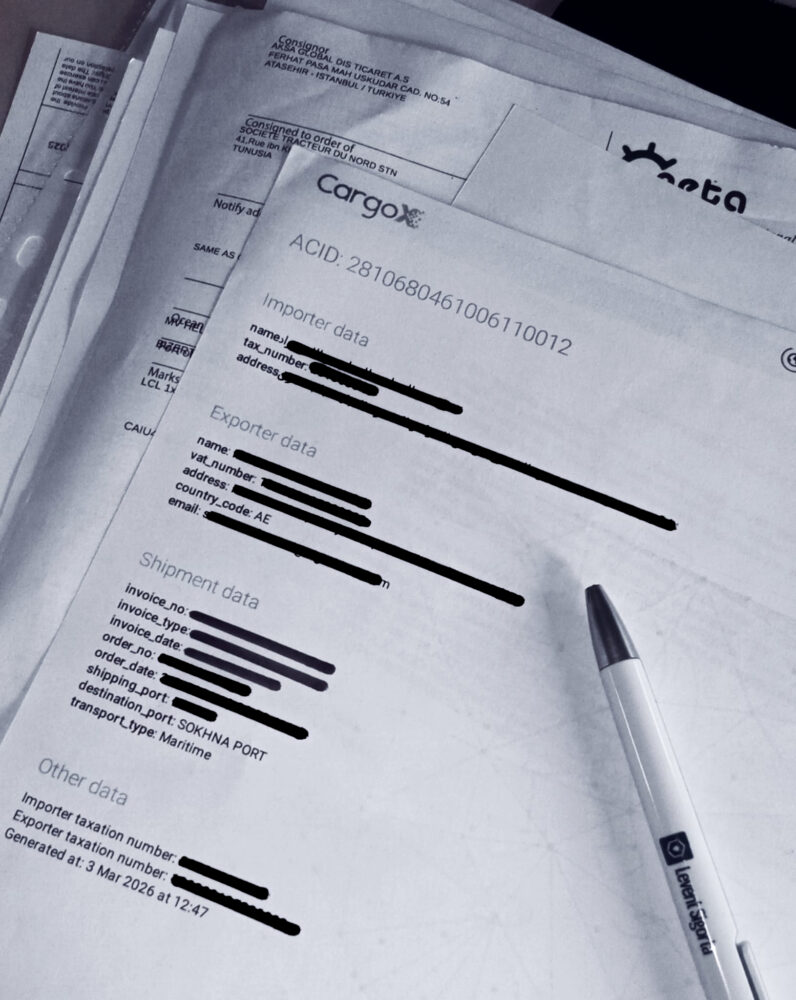
- 19-digit unique ID per shipment: The ACID is a unique 19-digit number issued for each individual shipment — not a one-time company registration. This number must be clearly printed on the Bill of Lading (or Air Waybill), Commercial Invoice, Packing List, and Certificate of Origin.
- Importer-initiated: The process always begins with the Egyptian importer, who registers shipment data on the NAFEZA portal. Once Egyptian Customs approves the data, the ACID number is issued and sent to both the importer and the exporter.
- Exemption for small express shipments: As of early 2026, shipments via express couriers (e.g., DHL or FedEx) weighing under 50 kg with a value not exceeding USD 2,000 are exempt.
How to Obtain Your Egypt ACID Number
Here’s a step-by-step guide to obtaining your ACID number in 4 steps:
- Importer registers on NAFEZA: The Egyptian importer must first register the shipment data on Egypt’s NAFEZA portal (National Single Window for Foreign Trade). This is where shipment details are entered and submitted for customs approval. The ACID number is generated after customs approves the data.
- Document preparation (exporter): The foreign exporter compiles all required documents: Bill of Lading or Air Waybill, Commercial Invoice, Commercial Invoice in Excel format, Packing List, and Certificate of Origin. For a side-by-side look at how Egypt’s requirements compare with other countries, see our document comparison table. Accuracy is critical — all documents must match exactly.
- CargoX submission: The exporter registers on the CargoX blockchain platform and uploads the required documents. Filing deadlines are strict:
— Air freight: Documents must be filed at least 8 hours before the flight’s departure
— Sea freight: Documents should be uploaded at least 48 hours before the vessel’s arrival - Receiving your ACID number: Upon successful verification, the Egyptian Customs Authority issues the ACID number. The consignee in Egypt will need to note this number on their documents from their end.
By following these steps and ensuring all documentation is accurate and complete, you’ll minimize the potential for delays and ensure your goods are cleared through customs efficiently. For tips on avoiding documentation errors, see our guide on the top 20 mistakes to avoid when obtaining cargo tracking documents.
What Happens If You Don’t Have an ACID Number?
Not having an Egypt ACID Number can introduce several serious consequences:
- Cargo rejected and returned: As of 2026, cargo arriving without a valid ACID number will be rejected and returned to the origin at the carrier’s expense — not the importer’s. This applies to both sea and air freight.
- Customs clearance delays: Without pre-verification, your shipment cannot be cleared on arrival, leading to longer processing times at Egyptian ports and potential disruption to your supply chain.
- Financial penalties: Egyptian authorities enforce strict penalties for non-compliant shipments. These fines can be substantial, adding unplanned costs to your shipping budget.
Navigating the ACID Number with CargoX and Nafeza
Understanding the roles of these two platforms is essential for compliance.
CargoX is a blockchain platform for the secure transfer of shipping documents. Foreign exporters use it to upload and transmit required documents to Egyptian Customs. The blockchain ensures all data is tamper-proof and traceable. Remember the filing deadlines: 8 hours before departure for air freight, 48 hours before arrival for sea freight.
Nafeza is Egypt’s National Single Window for Foreign Trade, operated by the Egyptian Customs Authority. The Egyptian importer uses Nafeza to register the shipment and receive the ACID number, which is then shared with the exporter for inclusion on all shipping documents.
CargoX Filing Costs (2026)
Filing fees through CargoX are as follows:
- Sea freight: 160 units (approximately USD $160) per shipment
- Air freight: 80 units (approximately USD $80) per shipment — promotional rate valid through June 30, 2026
Start Your ACID Application Now
Ready to apply for the ACID Number? Ensure your cargo meets all regulatory requirements by starting your ACID application today. Our team is here to guide you through each step, making compliance simple and straightforward. Visit our Egypt ACID Number service page for more details, or contact us directly.
FAQs
What is the validity of the ACID number in Egypt?
The ACID number’s validity is tied to the specific shipment it is issued for. Once a shipment has been cleared, the ACID number for that particular transaction is considered fulfilled.
How do you generate the ACID number?
The ACID number is generated by the Egyptian Customs Authority after the Egyptian importer submits shipment data on the NAFEZA portal and customs approves it. The number is then shared with the exporter.
Is the ACID number required for air freight?
Yes. As of January 1, 2026, the ACID number is mandatory for all air freight shipments to Egypt, in addition to sea freight (which has been mandatory since October 2021).
Who provides the ACID number?
The Egyptian Customs Authority provides the ACID number through the NAFEZA system, following the successful submission and approval of shipment data by the Egyptian importer.
Is CargoX mandatory in Egypt?
Foreign exporters must use CargoX to submit documents to Egyptian Customs — it is the approved document transfer platform. The NAFEZA portal is used by the Egyptian importer. You can contact us to handle the process on your behalf.
What does ACID stand for, and how do ACID transactions work?
ACID stands for Advanced Cargo Information Declaration. It’s a system designed to pre-validate cargo information before arrival, facilitating smoother customs clearance and enhancing security. Each ACID number is a unique 19-digit code tied to a single shipment.

